Editor's Choice

100% Successful Sales Tips

Selling is an art which defines the skill of a person who is able to sell the best without bifurcating any category of product or service. ...

Showing posts with label depression. Show all posts

Wednesday, July 3, 2019

Today is the Best Time to Start a Business in India

Today is the Best Time to Start a Business in India

India’s startup ecosystem is booming with plenty of interest from private equity investors and the media. Today the top graduates are preferring to start their own business instead of working for large corporate. Investors, customers and employees are also choosing startups over large companies – intrigued by the innovation and ingenuity. In this article, we look at the top reasons why today is the best time to start a new business in India.
This is a fantastic time to be entering the business world, because business is going to change more in the next 10 years than it has in the last 50, bill gates quote, indiafilings
Bill Gates Quote

Indian Economy is Booming with Endless Opportunities

The Indian economy is booming and the foreign markets are reviving from the 2008 economic crisis. The Indian economy is the the second fastest growing economy in the world and is slated to overtake China to become the fastest growing economy in  the world. Though the Indian economy continues to boom at a very fast pace, the Indian market or domestic demand is still undeserved. The Indian metros have become well developed over the last decade; however, thousands of tier-II and tier-III cities in India are still under developed.
The increasing penetration of internet enabled smartphones and e-commerce in India is set to transform the second tier or third tier cities – unlocking massive demand for goods and services. It is this aspect of the Indian market potential that has made countless foreign companies invest billions of dollars into India. Know more about top business opportunities in the India.

Easy and Affordable to Start a New Business in India


Start your company in less than a week

Starting a new business in India used to be cumbersome and expensive. India was ranked at 179/189 in terms of “Ease of Starting a Business” by the World Bank just a few years ago. However, ecommerce and a pro-business Government have now made it very easy and affordable to start a new business in India.
Plenty of information is now available through websites likes IndiaFilings.com for Entrepreneurs looking to start a new business. Also, for those starting a new business, the required formalities can be completed from the comfort of their homes at a very affordable cost. To register a Private Limited Company it costs just Rs.16000 and a Limited Liability Partnership can be registered for just Rs.8000 in India through IndiaFilings. Therefore, the internet has helped make starting a new business in India very easy and affordable.
Further, the Government has also introduced various measures to reduce the amount of formalities required to start a business in India. The newly introduced Form INC-29 drastically reduces the number of procedures required for incorporating a company in India, making it possible to incorporate a company quickly.

Its Easy to Manage a Business in India

The Government has also taken various steps to make it easier to manage a business in India by reducing the compliance burden. The Limited Liability Partnership (LLP) Act, 2008 and Companies Act, 2013 have introduced new business entities like LLP, One Person Company and the concept of “small company” making it less cumbersome to manage a business entity.
Further, the Goods and Services Tax (GST) is expected to be rolled out in April, 2016, overhauling the existing indirect tax structure in India – making it transparent and less cumbersome. Know more about the advantages of GST implementation in India.

Its Easy to Find Capital

Private equity deals worth nearly USD 2 billion were sealed in April this year, registering a jump of nearly three-fold over the same month last year, largely driven by transactions in e-commerce space, says a recent Grant Thornton report. The booming Indian economy and bustling Indian startups are attracting a lot of investors from foreign countries making today the best time for starting a new business in India.
There are now plenty of well established Private Equity firms operating in India and many more looking to start operations. Further, many High Networth Individuals (HNIs) and Celebrities are also beginning to understand the potential of Indian startups, making it easy to find seed capital for starting a new business. Know more about Private Equity in India.

Entrepreneurship has become Socially Acceptable

Gone are the days when friends and family chastised entrepreneurship and preferred their family members opted for employment over entrepreneurship. The success of many young Entrepreneurs has showcased the opportunities in Entrepreneurship – making it more socially acceptable. Today, family members are willing to support Entrepreneurship with capital and emotional support – increasing the number of Entrepreneurs and their chances of success.

There has never been a better time to start a brand in India: Here is why

Over the past two–three years, we have been tracking the rise of Indian consumer brands that have effectively leveraged technology and post-millennial branding to scale quickly. During our stint at ShopClues, we saw savvy merchants create brands with intelligent merchandising and targeted marketing initiatives.


Why brands?
The Indian consumer brand landscape has been abuzz with the appearance of new brands across categories. We deep dived into the emerging consumer brand story and came up with some key observations and insights.
Food and beverages
F&B opened up with multiple successful brand stories emerging recently, most notable ones being Paper Boat (traditional Indian drinks with nostalgic brand appeal), Bira 91 (bottled craft beers with quirky brand appeal) and Raw Pressery (cold pressed juices with ‘all good, no bad’ brand appeal) among others.
They identified a niche offering for the post-millennial consumer and built the brand using amazing storytelling on social media
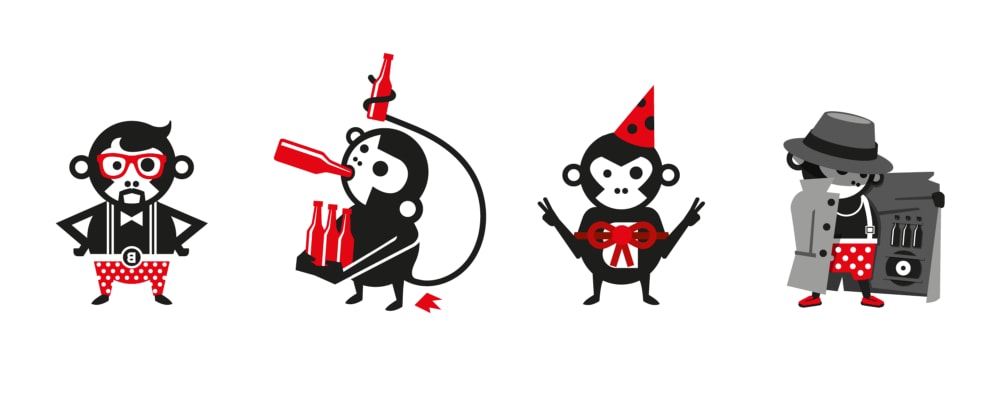
The Bira monkey embodies the brand’s quirky appeal. (Photo: Dev Kabir Malik).
FMCG
Brands like Ustraa (men’s grooming, quirky brand appeal), Sugar (cosmetics, edgy and sassy brand appeal) and Mama Earth (baby and mother care, friendly brand appeal) have been created from scratch in the last 5 years.
They piggybacked on e-commerce marketplaces like Amazon and Flipkart-Myntra-Jabong to build their brand presence while maintaining a unique brand identity through their own marketing and branding efforts.
Home and furnishings
This space has seen successful brands like Urban Ladder and Pepperfry emerge as market disruptors by successfully using online commerce as the primary channel.

They built their own online presence and gave the shopper a great furniture shopping experience.
Electronics
OnePlus (smartphone, ‘young and restless’ brand appeal) has established market leadership in the affordable premium segment. boAt (audio accessories, lifestyle brand appeal) has made its brand presence felt in a hyper-crowded category.
They created a community of fierce brand loyalists and fostered repeat purchases.
Fashion and apparel
The fashion and apparel category has seen an explosion of brands that have been created on marketplaces, such as Wrogn (men’s fashion, breakaway youth brand appeal); and on their own sites, such as FabAlley (women’s fashion, bold and individualistic brand appeal).
They leveraged celebrity icons and influencers successfully to accelerate brand awareness and adoption.
Virat Kohli’s association with Wrogn has catapulted the brand’s growth. (Photo: Storypedia)
Why now?
The brand story in India is just beginning to take shape, and we are poised for an exciting decade ahead.
Demand for brands is taking off
India has crossed $2000 per capita income, which experts say, is the inflection point for brands. Discretionary spending in the high income and upper middle income segments will drive adoption of brands that have an emotional positioning, beyond the functional (value for money) aspect alone.
These customers are online shoppers, follow trends on social media and make an effort to cultivate their personality.
There are stories to be told, emotions to be tapped and profits to be made.
The necessary working parts are in place
Reach: Customers can now be reached online through targeted digital marketing and branding on social media. New brands can reach customers across the country from Day 1 with clear visibility on RoI and conversion metrics. This kind of reach was only possible earlier through ‘spray and pray’ TV and newspaper advertising, where costs were high and conversions were not trackable.
Merchandising: Online channels enable brands to keep inventory lean while maintaining a large catalog, as opposed to physical stores where inventory was locked up. Customer analytics allow quick iterations where brands can fail quickly and get their product fit right without incurring a large loss.
Supply chain: The logistics pipeline has been simplified greatly by the emergence of companies like Delhivery and Ecom Express, who specialise in helping e-commerce brands with warehousing, order processing and cross country logistics. Further, GST has significantly reduced paperwork and shipping time. Brands are now able to serve customers across the country faster and at manageable costs.
Target customers can now be reached online and served effectively.
The unit economics make sense
As mentioned above, the cost of merchandising, reaching and serving customers is now lower. And customers are willing to pay more for brands that they aspire for and connect with. So the unit economics of building a brand are now in the range to create a sustainable business.
Most VCs we speak to agree that Rs 100–200 crore brands can be built in any category you pick.
The smart ones can scale further to create $100 million (Rs 700 crore) revenue brands in the next decade. The growth trajectory will be determined by the speed of the team and the money available to spend on brand building. And the best part — there is space for multiple brands to co-exist in the same category. It is not a winner-take-all game like the tech startup stories.
There has never been a better time to start a brand in India. What are you doing today?
Ganesh Balakrishnan is an entrepreneur currently building a consumer brand in the footwear space. He founded two startups earlier – Momoe (mobile payments) and Windsleeve (retail tech).
Read Ganesh Balakrishnan's columns here 
Startup Stories is a series of accounts by startup entrepreneurs on how they built their businesses and found success. Read them here.

Source: https://www.cnbctv18.com/startup/there-has-never-been-a-better-time-to-start-a-brand-in-india-here-is-why-3520291.htm